




Renovations have a way of uncovering the unexpected. You might be planning a new kitchen, renovating a bathroom or opening up your living space, only to find something behind a wall, beneath old flooring or above the ceiling that changes the entire project.
In many older Perth homes, that surprise is asbestos. It may not be recognised until demolition or strip-out work begins, when an exciting renovation suddenly becomes a safety issue that needs to be properly managed before anyone can continue.
At Slice It Right, we have seen otherwise straightforward projects lose valuable time because suspect materials were not identified before the first wall came down. Learning how to safely remove asbestos starts with knowing when to stop, arrange testing and plan the removal properly. The best renovations begin by removing those unknowns before they become obstacles.
The Biggest Renovation Challenge Can Be the Asbestos You Never Saw Coming
Not every problem is visible before a renovation begins. Older wall and ceiling sheeting, eaves, fencing and vinyl floor tiles may not be recognised as suspect materials until demolition or strip-out work is already underway.
One thing we have learnt at Slice It Right is that a late asbestos discovery rarely affects only one part of the job. Trades may need to leave the site, equipment can sit unused, bookings have to be rearranged and no further work can continue in the affected area until the material has been identified, safely removed and cleared.
Our approach starts before anything is cut, drilled or pulled apart. We want homeowners and builders to understand what they may be dealing with before demolition begins, because removing uncertainty early is one of the best ways to protect the wider project.
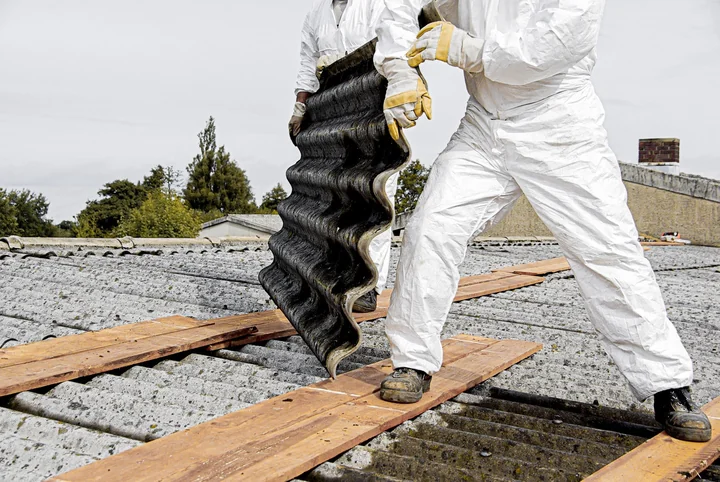
Once a suspect material has been confirmed as asbestos, removal needs to be planned around access, containment, waste handling and clearance so the renovation can safely restart. Slice It Right’s licensed asbestos removal service covers non-friable materials including fencing, sheeting and vinyl floor tiles, with compliant disposal and clearance coordination.
Are You Allowed to Remove Asbestos Yourself?
In Western Australia, homeowners may remove up to 10 square metres of non-friable asbestos from their own home. More than 10 square metres of non-friable asbestos, or any amount of friable asbestos, must be handled by a licensed asbestos removalist. WorkSafe WA recommends using a licensed removalist for any asbestos removal, even where homeowner removal is legally permitted.
In our experience, the legal limit does not answer the most important question: what material are you actually dealing with? Before anyone considers removing it, they need to understand what it contains, what condition it is in and whether the planned work is likely to break, drill or damage it. Even bonded asbestos can become a much larger problem when it is disturbed unnecessarily.
If the material cannot be confidently identified, stop before demolition and arrange professional sampling, with analysis completed by a NATA-accredited laboratory, or seek advice from a licensed asbestos removalist.
Confirming the material and planning the right removal method early is far easier than dealing with contamination, stopped work and rescheduled trades after the area has already been opened up.
What We Check Before Any Asbestos Removal Starts
Before we touch anything, we separate what has been confirmed from what is still only suspected. We look at the material’s location, condition and accessibility, then coordinate testing where required before demolition continues.
We then plan the controlled work zone, access route and waste path. This includes isolating the area from occupants, neighbouring spaces and other trades, and deciding how workers and removed materials will move through the property. Containment, compliant disposal and clearance coordination are considered before the first material is removed.
Our aim at Slice It Right is to complete the removal and leave the area properly prepared for clearance and the renovation work that follows.
How to Safely Remove Asbestos Without Creating Bigger Problems
At Slice It Right, we do not treat asbestos removal as a race to get the material off the property. Knowing how to safely remove asbestos means keeping the material controlled from the moment the work area is established until the waste has been packaged, removed and the area has been cleared.
The main priority is preventing fibres from becoming airborne, which is why suspect materials should not be cut, drilled, smashed or handled without the right planning and controls.
Our aim is to remove the identified material without creating another problem elsewhere on the property. That means isolating the work area, avoiding unnecessary damage, containing and packaging the waste for compliant disposal, and coordinating clearance before the home is reoccupied or following trades return.
Why Home Asbestos Removal in Perth Is Often Part of a Bigger Project
Home asbestos removal in Perth is rarely a standalone job. It is often one stage within a bathroom renovation, kitchen strip-out, extension, internal demolition or larger rebuild where older materials need to be dealt with before the planned work can continue.
Once the asbestos work is complete and the area has been cleared, the renovation may move into soft demolition and strip-out work or concrete cutting for new service penetrations, openings or structural changes.
If cutting or drilling is planned, concrete scanning can help locate reinforcement, post-tension cables and embedded services before work begins.
Because Slice It Right provides asbestos removal alongside demolition, concrete cutting and concrete scanning, we can plan the order of work around access, clearance and the next trade. This helps avoid unresolved hazards and further obstacles once the renovation is underway.
The Things That Catch Homeowners Out
A common issue we see on renovation projects is materials being assumed safe simply because they look solid and undamaged. The problem may not become obvious until someone starts cutting, drilling or pulling them apart. Appearance alone cannot confirm whether a material contains asbestos. The practical question is whether the planned work will cut, drill, break or remove the material and potentially release fibres.
Homeowners can also get caught out by starting demolition before older materials have been checked. A small amount of investigation early can prevent an entire renovation from stopping once the walls, ceilings or floors have already been opened up.
It is also important to look beyond the inside of the home. Asbestos-containing materials may be present in external eaves, fencing and sheeting, affecting fence replacements, extensions, landscaping works and external demolition.
Removing the material is only one part of the job. Packaging, transport and compliant asbestos disposal all need to be planned before work starts.
Builders, plumbers and other trades should only return after the area has been cleaned and the required clearance completed. Booking them earlier can create another round of delays.
Planning Ahead Makes the Rest of the Renovation Easier
The best time to deal with asbestos is before demolition starts, not after the first trade has opened up the building. Including asbestos testing, removal and clearance in the project schedule gives everyone a clearer idea of when the area will be ready and work can resume.
That planning gives following trades a realistic return date and allows access, containment, waste removal and clearance to be coordinated before anyone arrives on site.
At Slice It Right, we plan asbestos removal around the work that needs to happen next. Coordinating access, disposal and clearance from the start helps leave the area ready for the next trade without another avoidable delay.
Final Thoughts
Asbestos is not always the biggest problem on a renovation. The real disruption often comes from finding it after demolition has started, when trades are already booked, the building is open and the project cannot move forward as planned.
Understanding how to safely remove asbestos begins with identifying suspect materials early and getting the right advice before they are disturbed. When testing, removal, disposal and clearance are planned into the schedule, homeowners and builders can protect the people on site while keeping the renovation moving.
At Slice It Right, we provide licensed non-friable asbestos removal for materials including fencing, sheeting and vinyl floor tiles, with compliant disposal and clearance coordination. More importantly, we plan that work around the demolition, renovation or structural changes ahead, helping remove uncertainty and prepare the property for what comes next.
Planning a renovation or demolition project? Contact Slice It Right about licensed home asbestos removal in Perth.